The results are out! They don’t look so great overall. Unfortunately, this year, NECTA has decided to list them only by examination number.
As an alternative to the NECTA site, try our Maktaba site:
The results are out! They don’t look so great overall. Unfortunately, this year, NECTA has decided to list them only by examination number.
As an alternative to the NECTA site, try our Maktaba site:
Towards the end of 2011 the Southern and Eastern Consortium for Monitoring Educational Quality released a number of reports comparing the results of tests and surveys performed several years ago.
Tanzania’s primary students have performed well in the study comparing 14 countries in Southern and Eastern Africa. Two tests were given to pupils, one in reading (in the language of instruction) and the other in mathematics. In both tests Tanzania ranked third, behind the Seychelles and Mauritius in reading and Kenya and Mauritius in mathematics. This performance is especially good when one considers the fact that the Seychelles and Mauritius are island nations with much smaller populations and better economies.
While I didn’t expect Tanzania to fare so well compared to other nations, some of the other findings of the report made the results even more surprising. For instance, the study found that Tanzanian pupils had the worst access to textbooks. The mean number of days a pupil is absent per month (2.1) was also amongst the highest of the nations in the study. The reading scores of Tanzanian teachers were also slightly below average. GDP per capita was towards the bottom. Only 29% of Tanzanian classes had 40 pupils or fewer, while the mean across all nations in the study was 48%. Pupil to teacher ratio has risen from 47 (in 2000) to 56 (in 2007). It seems that the Tanzanian pupils have been managing to perform better with less resources than pupils from other nations.
Part of the reason noted for Tanzania’s performance in reading is that the language of instruction is Swahili, which is at least used, if not the primary language, in most of the pupils’ households. Most of the other countries in the survey teach their pupils in English, despite the fact that the language is infrequently spoken outside of the classroom setting. The study’s results seemed to show a correlation between average reading scores and the percentage of students speaking the language of instruction at home. Being taught in a more familiar language probably helps the mathematics scores as well, as it would be easier for the pupils to understand the concepts if they know the language better.
While the pupils in Tanzania performed well due to the use of Swahili in primary schools, when the students enter secondary school they struggle with the transition to English as the medium of instruction. The difficulty associated with switching languages is the reason why some people are pushing for using a single language for instruction throughout all levels of education, though there are advocates of using only Swahili (who say that it will foster better performance as shown in this study) as well as proponents of a switch to English in primary schools (by advocates who stress that English is necessary due to its prevalence in international business).
The Form Four Results for 2011 have been released. They’re available on the NECTA website at the following links:
2011 Form IV Results
In an article posted today in the Guardian, it has been reported that the Form Two National Exam is coming back.
I have very mixed feelings about this. On the one hand, I see the dismal pass rate at Form IV the past couple years as a product of the removal of the Form Two exams. Without the exam weeding out unprepared students, Forms Three and Four were full of too many students who were not prepared and/or motivated to learn the more difficult material. In a rural school, this could be 75-80% of the students in those forms, making for a difficult learning environment for the remaining students who were ready to learn. Due to peer pressure, there are often excellent students who just drop off completely in Form Three, since they do not want to stand out.
While in theory, the re-introduction of the exam should ensure a more prepared Form III. This, combined with the new Form I entrance exam for basic literacy announced by the Ministry of Education, will definitely act as a filter for students who are capable. The problem is, cheating is so rampant, that many students will probably continue to get through. In recent years, with the increase of technology, cheating has gotten even worse. All it takes is one unscrupulous headmaster to release the exam papers ahead of the date and thousands of people across the country can be quickly relayed the exam questions by text message. With a pass mark of 30%, just a few questions can go a long way to getting a student to pass. The tests need to be taken seriously by students and teachers. Teachers need to invigilate the exam with proper diligence and reduce the incidence of cheating.
Finally, the fact that a large number of rural students will be failing their Form Two exams is really an indicator of a larger failure in the educational system. Way before they ever get to Secondary school, many of these students are already set up for failure by having a grossly inadequate primary education. It’s not that they do not have the capacity to learn the material, but that their foundation is so weak, they are totally lost in secondary school. The language shift from Swahili to English definitely does not help, but even Swahili scores are not as good as one would expect. More needs to be done to improve primary education to reduce the failure rates at secondary schools.
Another article about the reintroduction of the exams
[Editorial from The Citizen]
Education for girls should no longer be the subject of negotiation, especially in light of the fact that females comprise the greater part of the population. As far back as 2003, there were 98 males for every 100 females in Tanzania. There should be more girls than boys in school now, all things being equal.
Yet the evidence paints a different picture. According to the Tanzania Domestic Household Survey of last year, at least 93 per cent of girls from the wealthiest families got full primary education, but only 54 per cent from poorest families did so.
There may be a number of reasons for this yawning disparity, and we can only speculate on some of them. Whereas girls from the former category may be chauffeur-driven to school, the latter often have to walk or, if they are lucky, get on public transport.
The same ritual is repeated when school is over and they have to return home. All too often, there are many distractions for girls caught up in this situation. With this kind of rigmarole, it is small wonder that only half of the girls from poor families complete education in Tanzania’s primary schools.
This is neither fair nor moral. Indeed, such disparities feed class segregation in our society—with one Tanzania of educated children from rich families and another comprising uneducated children from poor families.
No meaningful education translates these days into meaningful life opportunities. This is the destiny of most girls. This is not the Tanzania we want. Since the dawn of independence, we have upheld the dream of a society in which every child has an equal opportunity in education. We have aspired to have a country in which no child is marginalised, regardless of family status.
We should leave no stone unturned in our efforts to erase such glaring differences among Tanzania’s children. There is a saying that educating a girl is educating an entire family. The benefits should be clear enough.
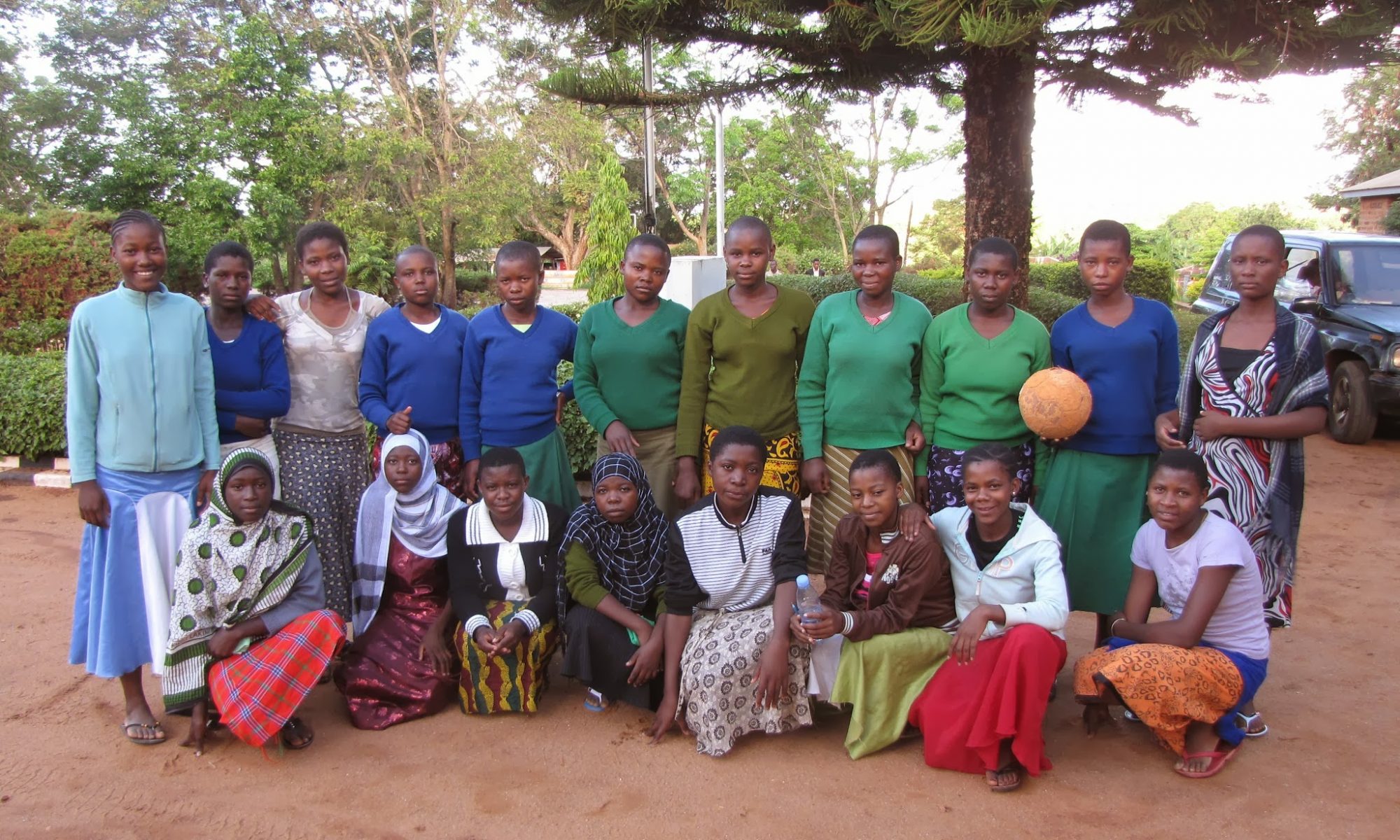
8 TETEA students have been accepted into various Universities. Seven of them have also been provided with substantial government loans based on their academic performance and financial need, averaging about $1900 each for this coming year, which will cover their tuition as well as various living expenses.
In addition, Karimu Lulanga has been accepted to Mtwara Teachers’ Training College to become a Secondary School teacher.
Congratulations to all of our students and may they continue to put their best foot forward as their studies continue!
As former Peace Corps Volunteers in Tanzania, we’re always proud of what the current Peace Corps Volunteers are accomplishing there. Recently the work of two Peace Corps volunteers at a conference on pedagogical practices was highlighted in the Tanzanian newspaper, The Guardian. The volunteers, Aron Walker and Peter McDonough set up an exhibit showing how to equip a science laboratory with locally available materials. In a country where all science subjects (Physics, Chemistry, Biology) are mandatory for two years and the laboratory supplies are scarce (not to mention the funds to buy them or to build the physical laboratory building), teaching science effectively can be difficult. Being able to set up a laboratory in a cost-effective manner using local materials would help teachers be able to better capture students’ interest and increase their understanding through practical, hands-on explorations. Way to go Aron and Peter!
Sobering statistics gathered from over 3000 13 to 24 year olds show that sexual and physical child abuse is all too common in Tanzania. Nearly 3 in 10 Tanzanian females have experienced sexual violence prior to the age of 18. The most common forms of sexual violence were touching various parts of the body followed by attempted sexual intercourse. Of those who had their first sexual experience prior to age 18, nearly one-third (29.1%) of females and 17.5% of males reported that their first sexual intercourse was unwilling, meaning that they were forced or coerced to engage in sexual intercourse. In addition, almost three-quarters of both females and males experienced physical violence prior to 18 by an adult or intimate partner.
The location of sexual violence merits careful consideration by educators. While almost one-half of females who had experienced sexual violence prior to age 18 indicated that at least one of their experiences of sexual violence took place at someone’s home, almost one-quarter reported an incident occurred while travelling to or from school and 15% reported that at least one incident occurred at school or on school grounds.
The study casts light on the perpetrators of physical violence against children. Almost 60% of both females and males experienced physical violence by adult relatives and more than one-half experienced physical violence by teachers before turning 18 years of age.
The majority of childhood sexual violence against both females and males occurred between the hours of 12:00 (noon) and 20:00 (8:00pm).
The study is a landmark in the global efforts to tackle child abuse. Tanzania is the first country in Africa to undertake a National Study on Violence against Children providing national estimates of the prevalence of violence. The study’s results have prompted the government to develop a five-year National Plan for Prevention and Response to Violence against Children intended to break the silence around violence against children.
With the goal of building and running a school in Tanzania, TETEA needs to remain mindful about the widespread presence of violence in schools, even by teachers, and reflect carefully on how to ensure a safe environment for our future students.
“Violence Against Children is Totally Unacceptable,” by editor. 13 August, 2011.
“Tanzania Study Shows One in Three Girls is Sexually Abused,” 9 August, 2011.
“Violence Against Children in Tanzania.” United Nations Children’s Fund, August 2011.